Sunday, August 25, 2019

2020 SCA Birka Garb Challenge - Part 1

This year's Garb Challenge was announced ..


His Highness and I would like to invite you all to join us in this 
year's Garb Challenge for Birka. Put on your thinking and research hats, because we hope you will enjoy getting creative with this year's theme: MYTHOLOGY! Any Pantheon! Any culture! All styles! 


So after considering several cultures I settled on a Finnish Goddess with her outfit based in the Iron Age.


"Mielikki is the Finnish goddess of forests and the hunt. She is referred to in various tales as either the wife or the daughter-in-law of Tapio, and the mother of Nyyrikki and Tuulikki. She is said to have played a central role in the creation of the bear."

First image of Mielikki used for inspiration


Woven ribbon I chose for the triple wrap belt for the over apron


        The plan is to adorn the ends with Iron Age/Viking Age wire coils at each end. So I carefully unwove about a foot at each end in preparation to attach the coils once I made them


Traditional and Ancient ways of wearing adornments varied from region to region and differed from Norse Viking groups. The Finns had the two amulets that secured the overdress but there was a center medallion or brooch over the breastbone. Most of these stones came from my stash as did the center pin (Originally gifted to me by Amy Lindsay). I really like the bone center piece that I found in a jumble box.


Sunday, August 18, 2019

PSY 224: Psychology Research Paper

I had the opportunity to suggest y own potential study to look at long-term use of drugs or alcohol as a coping mechanism instead of counseling or support.

***********************************************************


The Use of Alcohol and Drugs in Response to Grief and Loss
I am interested in cognitive psychology and the ways that stress, loss or grief may contribute to, or exacerbate, addictive tendencies or behaviors. Behaviors such as alcoholism, drug addiction, emotional eating and other compulsive or addictive behaviors.

Literature Review
            In treatment facility websites and blogs, published writings acknowledge that grief and loss are seen as primary factors people have cited as one of the reasons, they began using controlled substances or alcohol as coping mechanisms. Specifically, where they did not feel other options, such as family support or professional counseling, were available, or accepted by their core community. There seems to be a belief still held in parts of this country that men especially do not seek out support groups of counseling. It can be seen as a sign of weakness and there is social pressure, real or perceived, that those who do are not “real men”.
A 2017 study published in Addiction Research & Theory was conducted with individuals who had experienced a death in their family and also reported increased usage of alcohol or drugs (Masferrer, 361-367). This research used a control group that reported not using substances during grief in order to see what correlations there may be. While the data collected was very interesting there was no follow up over time to determine whether those reporting higher usages changed over time.
A 2017 paper by R. Andrew Chambers reviewed the neurobiological overlap found in the chemical and neuron pathways between grief and addictions. (Psychodyn Psychiatry). This study looked at the similarities between the process of attachment pathways that are disrupted during the grieving process, and how the same pathways appear to be present in those trying to end addictions, acknowledging that letting go of any behavior is similar to the grief process. This opens up questions regarding how to better understand the correlation between the two and facilitate better, and more effective treatments, for them.
The article did not report on their own unique data which may have resulted in different findings. The article is also not focused just on addictive behaviors but attachment disruption as well which may affect interpersonal and romantic relationships. An argument could also be made that the authors had a very personal reason for coming to the conclusions they did. As their acknowledgments include a statement that the paper is dedicated to various family members who died as a result of nicotine addiction.
A Hungarian study of ~4400 people, men and women, between the ages of 18-75 over a three-year period, the authors wanted to understand any correlation between the grief / mourning process and the rate of alcohol misuse (Piling, 2012). The researchers not only measured behavior over this period using the Alcohol Use Disorders Identification Test (AUDIT), but also drew from the Hungarostudy Epidemiological Panel Survey (HEP) conducted in 2006. Data collected was analyzed by gender and time of bereavement, and further broken out to account for educational levels. They found that there was an increase in alcohol abuse in this population, and that men were more likely to experience alcohol related problems than women.
Within the Hungarian study the authors do make note that some data may be skewed against the women sample as they mention that: “When interpreting the results, we also have to consider that women might perform differently on tests that require the estimation of alcohol consumption, and might be more likely to hide their alcohol related problems” It also is noted that the original HEP data was collected as part of a government initiative, and while follow up interviews regarding alcohol use was conducted by nurses, the original population were not specifically selected for, or asked about, their alcohol use.
The Hungarian study was participant driven; such participants were culled from a much larger cross-section of the nation’s population. The data analyzed came from approximately 4,500 questionnaires with follow-up that the participants provided. The authors used an ordinal regression model where each gender was analyzed separately before they were combined into overall findings. The Chambers’ paper focuses more on the biological mechanisms and social interactions as a neurological basis for maladaptive behavior such as addiction. As such the paper does not address the specific statistical methods used or how conclusions were arrived at via data review.  I see more statistical value in the Hungarian study as it had direct data collection from the participants. While interesting, and given some references worth following up with, the Chambers’ article would not pass statistical scrutiny, in my opinion.
In neither paper were any Conflicts of Interest noted by the authors (APA Standard 3.06), no identifying participant information that would breach their confidentiality (APA Standard 4.01) and no mention of any inducements offered for their assistance in the research (APA Standard 8.06).  The Chambers’ paper had no direct contact with individual participants as the Pilling research did. In the case of the Pilling paper the authors note that they did receive approval by the Ethics Committee of the Semmelweis University in Budapest (APA Standard 8.01) and participants did consent to participate (APA Standard 8.02).
            In reviewing various articles and websites dedicated to looking at the correlation between substance abuse and loss as a contributing parameter, there are not as many that follow a subject for an extended period of time to ascertain whether the reliance of a substance decreases as a function of time from the date of the event. Conversely, I have not yet found definitive studies that the use of various substances increased over time. I did locate one European study that looked at the amount of alcohol imbibed over time after the death of a family member. I would like to see if the use of other stimulants/depressants are also linked to a person’s loss/grief as a function of time.
            When looking at articles published by others, the Alcohol Use Disorders Identification Test (AUDIT) is cited as a tool used when interviewing participants. When reviewing the work done by the  World Health Organization (WHO) team that developed the test however I found the wording of the AUDIT to be judgmental and not what I think would pass muster in a study today, taking into consideration that the test was developed in 1993 I was surprised that in 2006 the Hungarian team would still be using it at all. And that calls into question for me whether the data collected was indeed truly representative or under-reported due to the negative connotation in some of the questions.
The previously mentioned Hungarian study (Piling 2012) culled their initial data from a country/region -wide survey called the Hungarostudy Epidemiological Panel Survey (HEP) conducted in 2002. In looking at references to HEP it appears to be an agency funded regular survey open to all residents in Hungary and surrounding countries. It consists of many focus points for the questions asked such as job security, family dynamics, happiness ratings, use of alcohol, reasons for missing work etc. I have seen articles using this data discussing issues such as worker displacement (Brenner, 2014), Pertussis prevalence (Torza, 2017), early maternal separation (Szilvia, 2011) and premature mortality (Kopp, 2011). All of which leads me to conclude that the initial data collected on the 2002 and subsequent 2006 follow up was “cherry picked” for its relevance to the authors’ intent.
                        The Piling article is a Retrospective Research Design where they looked at prior research conducted by others, with a cross-sectional component. As the original survey asked about a wide variety of life factors it was not specifically written to address the use of alcohol as a means of coping with grief. The Masferrer article also used Retrospective Design to make their conclusions, but they also did make use of a retrospective cohort where findings were compared between alcohol users and non-user so they were able to draw some comparisons.

Thesis Statement
            People process grief and loss in a variety of ways. The mechanisms a person uses to handle their pain are often influenced by factors such as their social, cultural or religious background. One of these mechanisms can be the over use of alcohol, narcotics or prescription medications as a tool to dull or erase the painful or difficult feelings that they associate with the traumatic event. This study will look at whether the use of such substances decreases over time as the feelings around the loss are managed and processed, and do factors such as age, gender, educational level and support system(s) effect levels of usage.  

Method
            I would like this study to be presented as a simple fact finding one to ascertain how much a day/week people are using controlled substances or alcohol as a function of time and grief. Without presenting any verbiage that could be construed as disapproving I believe more accurate information can be obtained.

Methodology
            Preliminary research has confirmed for me that direct participant data points will provide the most accurate information to look at causality between loss and substance abuse and other addictive behaviors. Collecting data points such as age groups, gender and time since the loss along with amount of alcohol, drugs, food etc. are being used to self-sooth will also provide a more focused collection of data points.
I would structure my study to be Prospective Design which will allow for follow up with the participants over several years, ideally at six-month intervals. The study participants could be stratified based on the substance they use most often, this would allow data to be sliced based on chemical(s) used then rolled up into overall findings based on gender, age or other.
Based on the guidelines of Section 2.06 of the APA Manual the study could be described as:
Participants will be asked to participate based on recommendations from either their personal mental health professional, or supervising medical practitioner during their stay at a substance abuse program. Subjects must be at least 18 years old and include a variety of educational levels along with self-identified gender and ethnic classifications. Initial data collection will be in the form of a written questionnaire regarding their grief/loss experience and use of alcohol, prescription and/or other substances. Follow-up contact will be done at six-month intervals with a target of three years total for each subject. To allow for attrition and drop-out rates an initial sample of 800 people is targeted to assure enough robust data is available for analysis.

Research Participants/Sampling Frame
As the study will be looking primarily at those who not only experienced a significant loss or grief event, but are also may be self-medicating with drugs or alcohol, seeking the cooperation of personal mental health professionals who can refer patients for the study, and are well educated on the safe guards that will be put into place to protect the patients from any prosecution, will be vital. Given that not all such referrals will be using alcohol or drugs the inclusion of non-self-medicating patients will allow the study to have a control group and hopefully provide insight into other coping mechanisms employed and if the subject does begin to self-medicate at a later date.
Working with IRBs and with similar guidelines, staff that work with in, and out, patient treatment facilities would be able to identify those who experienced recent loss/grief and would be appropriate to the study. This population may be harder to follow up with and discussions around confidentiality, non-identifying measures for their responses and best methods of private follow up may be slightly more problematic.
As noted in the prior section an ideal cohort of 800 initial responders will hopefully result in at least 500 follow up subjects for the entire three-year period across age, gender, education and preferred self-medication groups.
An additional source of participants might be physicians who have patients that meet certain pre-determined criteria. Perhaps fluctuations in weight, prescribed medications in the aftermath of loss or other blood test results that could indicate the use, or uptick in use, of alcohol or drugs. This would not only require IRB/EC approval from the practice or affiliate hospitals but could place the physician in a very awkward position by asking if their patient would like to participate. This could potentially cause a rift and in the doctor/patient relationship and could be seen as a conflict of interest for the physician.

Data Collection/Instrumentation
            The use of marijuana, opiates and the over-use of alcohol and prescription medications can be a very sensitive issue for many people. While alcohol is legal within the United States, and marijuana has become legal in a few States, there is still a social stigma associated with their use beyond what is considered casual use. Being aware of this, the study has been designed to let the participants self-identify initially in relative anonymity.
            The questionnaire has been carefully written to remove any judgmental wording or subjective phrasing that should allow the participants to feel more comfortable responding to inquiries about substance(s), usage amount(s), cause of their loss and if they have other options of processing mechanisms such as a therapist, family, support group etc.
            Once the participant has been accepted into the study, trained staff will do follow-up interview contact every six months to ask about current usage, support options etc. The participant will only be known to the interviewer by first name and contact number or e-mail. I prefer this type of structured interview as it can be conducted fairly quickly during the follow-ups, and all participants will have the same response options for the researchers to be able to have consistent data for analysis. This collection of quantitative data will either support or disprove the hypothesis, and perhaps support a more in-depth series of case studies in the future.

Protection of Participants
There are potential issues in identifying participants for such a study. One avenue might be to solicit participation from those entered into in-patient treatment facilities after a specific period of time so to allow them some respite and healing before gathering information. This would involve not only Informed Consent from each person but IRB approval from each facility, and only once both are approved and in hand could data be gathered. It would be made clear to patients that their declining to participate would in no way adversely affect their course of treatment or eligibility for treatment.
            The researchers will endure that participant identifying information and other confidential records are stored in a secure area with limited access, and stripped of identifying information, as outlined in Section 1.11 (Rights and Confidentiality of Research Participants) of the APA Ethical Principles of Psychologists. Also, as the study will seek information about potentially illegal substances each participant will be protected with a Certificate of Confidentiality and informed that no information about their usage will be given to any employer, school, or law enforcement agency.  

Discussion
            When considering the possible findings of this study there appears to be two strong results that are expected. 1) That those participants who have experienced a significant loss or source of grief, and therefore have increased their use of various substances, will over time taper off their usage amounts when availing themselves of various support structures. Such as family, groups, counseling and therapy. Or 2) Usage amounts that rose in response to such an event will not taper back to pre-loss quantities due to the absence of the aforementioned support frameworks.
            If this study is able to show that people in crisis and loss fare better overall with support such as groups, individual therapy or other cognitive behavioral treatments (hereafter referred to as “therapy”), then eventually health care companies and insurance corporations will see the overall cost benefit to the patient and medical resources in offering reimbursement for such treatment. The idea being that therapy can prevent far more costly options due to the abuse of alcohol and drugs. A positive correlation between a reduction in usage and support options could be used as part of a proposal to fund additional longitudinal case studies where specific biomarkers and laboratory tests could support the bodies return to a healthier state than if the over-use or abuse of substances continued unabated.
            This studies results may also shed insight into trends between the various substances asked about. There is plenty of literature that speaks to the addictive qualities of specific drugs over others and the cost to the public to deal with the fall out (Trends & Statistics, 2017). There is currently little long-term follow up when looking at people’s alcohol and drug usage, specifically as it relates to a primary stressor. Being able to show a direct link between the two can open up avenues for health-care providers to explore regarding how to perhaps recognize the link and then have applicable resources for that patient in order to help them manage the situation in a more constructive manner. A manner that would not only be healthier for the patient, but cost effective for the system as well.


References
Brenner, M. H., Andreeva, E., Theorell, T., Goldberg, M., Westerlund, H., Leineweber, C., Magnusson-Hanson, L. L., Imbernon, E., Bonnaud, S. (19 May 2014). Organizational Downsizing and Depressive Symptoms in the European Recession: The Experience of Workers in France, Hungary, Sweden and the United Kingdom. PLos ONE 9(5). https://doi.org/10.1371/journal.pone.0097063
Chambers, R. A., & Wallingford, S. C. (2017). On Mourning and Recovery: Integrating Stages of Grief and Change Toward a Neuroscience-Based Model of Attachment Adaptation in Addiction Treatment. Psychodynamic psychiatry, 45(4), 451–473. doi:10.1521/pdps.2017.45.4.451

Csóka, S., Simor, P., Szabó, G., Kopp, M. S., & Bódizs, R. (2011) Early maternal separation, nightmares, and bad dreams: Results from the Hungarostudy Epidemiological Panel, Attachment & Human Development, 13:2, 125-140, DOI: 10.1080/14616734.2011.553991

Kopp, M. S., Skrabski, A., László, K.D., and Janszky I. (Mar 2011). Gender patterns of socioeconomic differences in premature mortality: follow-up of the Hungarian Epidemiological Panel. International Journal of Behavioral Medicine. 18(1), 22-34. DOI: 10.1007/s12529-010-9126-5
 Masferrer, L., Garre-Olmo, J. & Caparrós, B. (2017) Is complicated grief a risk factor for substance use? A comparison of substance-users and normative grievers. Addiction Research & Theory, 25:5, 361-367, DOI: 10.1080/16066359.2017.1285912
Publication Manual of the American Psychological Association, Sixth Edition. (2010). Publication Manual. Washington, D.C.
Saunders, J. B., Aasland, O. G., Babor, T. F., de la Fuente, J. R., Grant, M.
 (1993). Development of the Alcohol Use Disorders Identification Test (AUDIT): WHO Collaborative Project on Early Detection of Persons with Harmful Alcohol Consumption – II. Addiction, 88, 791-804. Retrieved from:
http://www.automesure.com/library/pdf/8329970.pdf

Totza, P., Devadiga, R. and Tafalla, M. (04 Apr 2017). Seroprevalence of Bordetella

pertussis antibodies in adults in Hungary: results of an epidemiological cross-

sectional study. BMC Infectious Diseases. 17:242.  https://doi.org/10.1186/s12879-017-2356-2
Trends & Statistics (2017). National Institute on Drug Abuse, a division of the National   

Saturday, August 17, 2019

BIO 205 Final Project

One of the classes I took as a refresher was a Biology and Physiology class, This was my final project on the Endocrine System


Saturday, June 22, 2019

FAS 320: History of Design

This was a class I took just for the sheer enjoyment of it. I loved learning more about various elements of design and how it can impact us over and over as we discover new and old items anew.

******************************************************************


Abiding Beliefs, Changing Designs.
Melissa J. Dawson
FAS 320: History of Design
Southern New Hampshire University
22 June 2019


Title: Abiding Beliefs, Changing Designs.
Theme: Expressions of faith within the Judeo-Christian belief systems.
Thesis Statement: The period from 1880-1980 saw the fastest rates of change in recorded history: technology, cultural norms, clothing styles, social conflicts and design styles. Yet throughout, men and women used a variety of design aesthetics to express their search for, and belief in, their God.
Overview Information: From the earliest days when people first gathered together to worship in community, they have used art and design as part of their rituals. Having symbols and images commonly understood within the group that represent key beliefs and shared history served as another way of strengthening the bonds between individuals, and their God.
            This exhibit will look at different design periods over the last 140 years through various
mediums such as textiles, metal work, paintings and sculpture. By looking at samples of each
design movement side by side both the differences and similarities in the work’s intent can be
identified and compared. Information relevant to historic, political and social events occurring
within the time span for each design aesthetic will give some insight into the impetus for that
period’s creative expression. 
Within the Judeo-Christian fellowships there is one major difference between the groups in the images they employ. Within the Tanakh, the Hebrew Bible, there are a number of references that specifically forbid idolatry. Within traditional Judaism the definition of an idol, or graven image, includes any painting, carving, sculpture or other item that uses part or all of a human image to portray Yahweh, Jehovah, angels, heavenly bodies, or other people mentioned in the Tanakh.
Much of these restrictions had to do with the surrounding cultures during the time of the Old Testament when societies had multiple idols and images that they worshipped as gods. While this restriction is not as deeply held outside of the Orthodox and Hasidic sects in the modern era, there is still less use of human imagery within the Jewish faith than within Christian churches.

1880 – 1889: Arts & Crafts
Following the death of Abraham Lincoln in the United States and the increased hostility towards the Jewish communities in Russia there were additional social stressors that made people eager for a simpler way of expressing themselves. Events that caused people to feel that their world was changing too rapidly included:
  • ·       Edison demonstrates the first electric Christmas Lights
  • ·       Gold is discovered at Sutter’s Mill setting off a frenzy of greed
  • ·       James Garfield is shot and dies soon after from the infection and ineptitude of his doctors
  • ·       The greatest technological feat to date is opened to the public – the Brooklyn Bridge. But panic during the opening weekend led to dozens of deaths and hundreds of injuries.
  • ·       The explosion of Krakatoa near Java effected global weather for years
  • ·       Haymarket Riots in Chicago highlighted the dissatisfaction of the labor class
  • ·       Victims of Jack the Ripper began to be found in London
  • ·       The Johnstown Flood claimed 2,200 lives – the worst recorded disaster at the time

These events helped to fuel the Arts & Crafts design movement which promoted economic and social reforms while moving away from the industrial mass production of furnishings that was
beginning to cost craftsmen their traditional livelihoods. The movement focused on the skill of the creator and an appreciation for his expertise.


Image 1 – Hanukkah Lamp
Image 2 – Traveling Communion Set


Unknown Maker. “Hanukkah Lamp” circa 1888. Silver, made in Germany. Accession Number JM 83-52, The Jewish Museum. www.thejewishmuseum.org

Horace Woodward and Company. “Traveling Communion Set” Listed for sale online. Sterling, glass, wood. 1892. https://www.bryandouglas.co.uk
Both of these objects, made for rites that commemorate key tenets of their faith, reflect simple design lines that do not distract from the objects’ primary purpose. By eliminating superfluous adornments each item takes a step back and lets the meaning of the ritual associated with each, take primary focus for the user and fellow worshiper. The flames of the candles that are lit each night are reflected in the satiny silver of the Menorah, allowing those gathered to reflect on the struggle and sacrifice of the Maccabees which they are commemorating. The lack of embellishment likewise on the Communion Set draws the giver, and receiver, of the Sacraments to the Wine and Bread without distraction. Letting the deep meaning of the words and actions be the focus.


1890 – 1909: Art Nouveau

Technology continued its advance with the World’s Fair in Chicago, completion of the Eiffel Tower, creation of Crayola Crayons, the steel industry growing, the founding of the Ford Company, and the introduction of the first Nickelodeon in New York City. Music styles were also changing and expanding as composers began to base new works on ancient Native American songs, rhythms from the Negro spirituals, and old folk tunes from various immigrant groups. Jazz and the Blues were beginning to be heard by a wider audience along with gospel music. Cities were founding orchestras and building impressive concert halls, while composers like Sousa were gaining celebrity status. Amidst these other changes people were becoming more aware of the world around them and its natural beauty. And events such as the following influenced not just the general population but artists of various mediums as well:
  • ·        Antonin Dvořák comes from Bohemia to the United States where he becomes very interested in American music incorporating African American and Native American music.
  • ·        Yellowstone is declared as the first United States National Park followed by Yellowstone
  • ·        Claude Debussy writes “The Afternoon of a Faun” for orchestra
  • ·        Sierra Club founded
  • ·        Vesuvius erupts
  • ·        Widespread devastation reported in the wake of the San Francisco earthquake and the Galveston Island Hurricane
  • ·        The Klondike Gold Rush generates some of the first pictures of Alaska to the general public
  • ·        Frederick Cook and Robert Peary both claim to be the first men to reach the North Pole.


While not all of these events showed nature in a positive way, they all contributed to
people’s appreciation of the various images of flora and fauna that were appearing as design motifs on home furnishings, jewelry and textiles and are the most recognizable aspects of Art Nouveau design. 

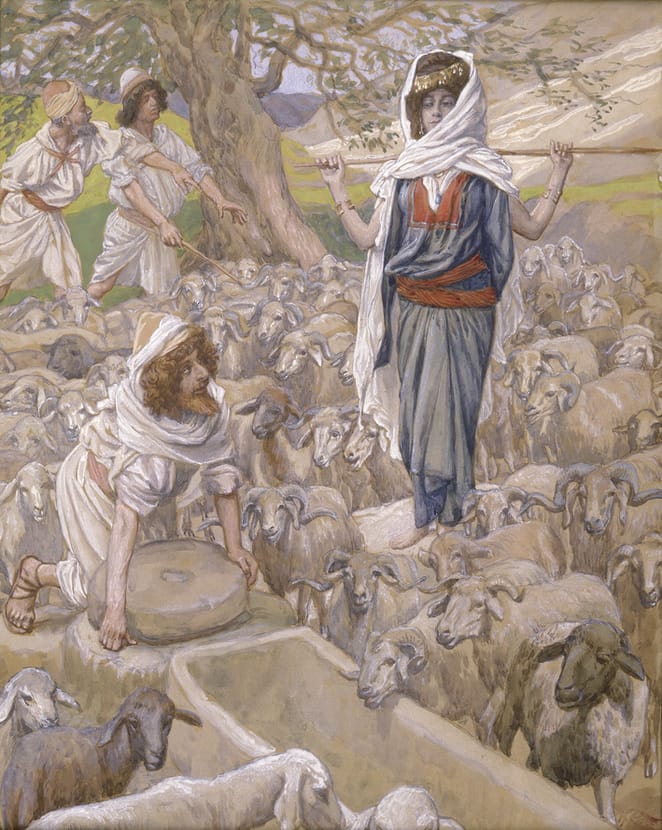
Image 3 – Old Testament Painting


Image 4 – Tiffany Stained Glass


Tissot, James Jacques Joseph. “Jacob and Rachel at the Well”. Accession Number X1952-114, The Jewish Museum. www.thejewishmuseum.org

The artist has used a soft palette of neutrals and desert tones to reflect the dry conditions of the region. Even the animals reflect the concept that water is a vital component in the lands mentioned during Old Testament story. As such the color of Rachel’s clothing suggests that not only is she the main figure of the story, but the blue represents water and fertility in a culture that valued both.
Tiffany, Louis Comfort. “Jesus and the Children”. Stained glass, lead. 1904. Installed at the Arlington Street Church, Boston, MA. www.asctiffany.org
Upon first look the viewer sees that green is the predominant color in this window. That monochromatic palette highlights the white of Christ’s robes and sets him apart as the central figure of the composition. Green is symbolically the color of renewal and new life and those concepts are mirrored with the images of the children. Tiffany’s skill with color variations in the glass meant that he could get the effect of drapery with fewer pieces of glass than prior designers.
One of the enduring themes of the Jewish and Christian faiths is the sharing of stories recorded in the Bible. The retelling of those stories reinforces bonds within the community as well as teach their children the basic tenets of their faith. These two examples of well-known narratives showcase the changing design parameters from Arts & Crafts to Art Nouveau. A style noted for its inclusion of naturistic motifs and the softer lines found in nature. Earlier renditions of these story illustrations were primarily of the key characters and noted little in the way of scenery, fauna or framing embellishments. Image 3 has so many animals shown that the human characters seem to be of secondary importance. And the ornate border of the stained-glass window carries as much visual weight as the primary image, unlike earlier pieces where the border has little visual impact. 

1907 – 1920: Cubism

Unlike some other changes in design, Cubism was not a direct response to world events but more of a shared concept between Georges Braque (French, 1882-1963) and Pablo Picasso (Spanish, 1881-1973). They thought that emphasizing the two-dimensionality of the plane of the canvas would allow them to reject the traditional view that art had to rely on nature or the ideas of foreshortening and perspective which had ruled the art world for centuries. 

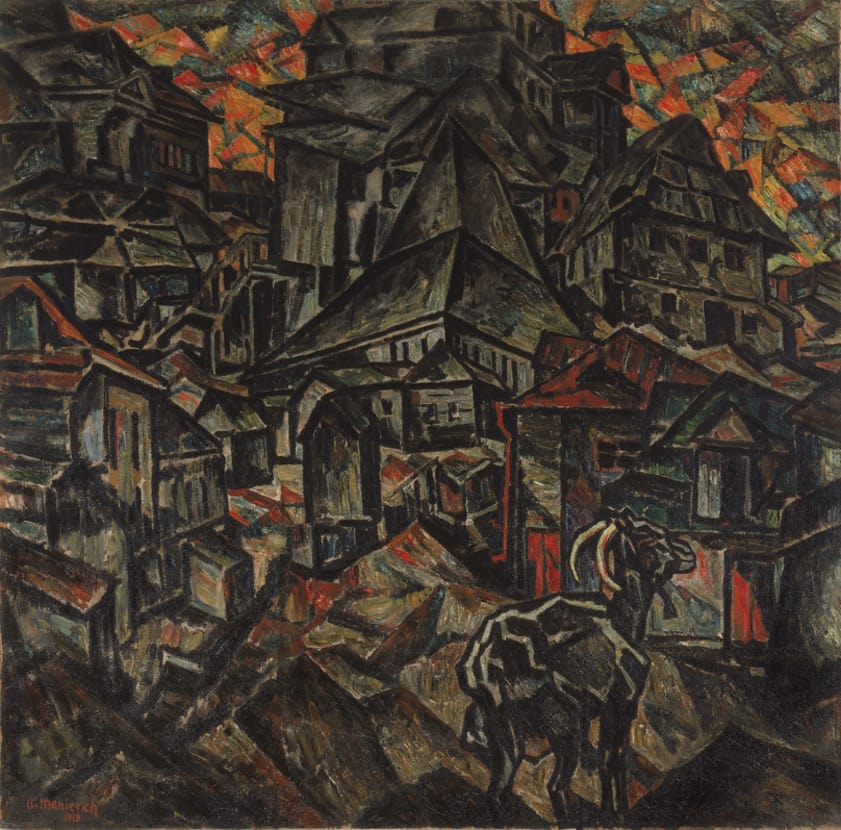
Image 5 - Destruction of the Ghetto
Image 6 - Crucifixion


Manievich, Abraham. “Destruction of the Ghetto, Kiev”. Oil on Canvas. 1919. Accession Number 1991-30, The Jewish Museum. www.thejewishmuseum.org

The first visual impression of this piece is one of darkness and heaviness. That comes from the somber palette of colors punctuated with a restricted amount of hotter oranges and reds that suggest burning and destruction. The feeling of oppression that comes from having the crammed buildings in dark colors fill the entire canvas. This accurately symbolizes the oppressive feel that the residents of the ghetto must have felt while they lived there and as it was being destroyed.

Picasso, Pablo. “Crucifixion”. Oil on board. 1930. Collection of the artist’s estate. www.pable-ruiz-picasso.net

Bright primary colors at first suggest a childish portrayal of the Biblical story. However, the composition and arrangement of the figures make it clear that the work is from a talented mature artist. The figure of Christ shown in a washed out pale grayish color not only brings the viewers focus to the central figure, but the color reinforces the theme of the story which is that a corpse is being removed from the cross.

While these two paintings appear very different at first glance, they do share a common thread of symbolism. Aside from the Cubist style of each piece, their message is one of destruction and loss that will eventually lead to a richer new life, yet without the participants being aware of it at the time.                                   

The pogroms that have occurred multiple times in Eastern Europe over the past seven centuries usually preceded more widespread unrest within a country and their reigning government. Feeling threatened by a strong minority group, such as the Jews who historically have managed large amounts of money, a local government would stir up resentment in order to get ethnically native people to attack the perceived “enemy”. Each time the residents would be persecuted and driven out, they would move their skills and talents to a new country or continent. The dark palette of the piece brings to mind the sense of oppression experienced by the community in Kiev along with the assaults, rapes and murders that occurred on a regular basis.

The Picasso piece also highlights the sense of loss and chaos experienced by the followers of Jesus at the time of his death. They also had no idea at that moment whether everything they believed to be true was wiped out or if there was anything positive that would ever come from such a monstrous event. His palette of bright colors was more a personal preference and seem to be in direct contradiction to the gruesomeness of the moment. While Picasso stated in several interviews that he was not a practicing Christian, he did find the interpretation of pain and suffering an interesting concept to convey through his art.


1910 – 1939: Art Deco

Combining rich materials, modern style and fine craftsmanship Art Deco design represented the pinnacle of glamour and luxury. It also was a return to more simple lines of Arts & Crafts without the strict adherence to the sharp angular lines of that earlier design style.  The desire for a return to a cleaner, more controlled aesthetic, may also have been a response to the upheaval of the first global war and pandemic. The Great War, later called WWI, is considered as the first “modern” war that included airplanes, chemical weapons, 20 million deaths and around 21 million casualties. People had not been exposed to this level of carnage, disfigurement and death since the continent-wide plagues of the 13th and 14th centuries. On the heels of that destruction the “Spanish Flu” began to affect people worldwide. Estimates are that approximately 500 million people were infected with a mortality rate of 10% - or 50 million. Death rates were highest in the very young and the very old. This is speculated to be because the ages in between had been exposed to a similar strain before the turn of the century and had acquired a limited immunity to the 1918 H1N1 strain of the virus. 

Image 7 – Wedding Dress
Image 8 – Art Deco Chasuble and Stole


Unknown. Moroccan Jewish Wedding Dress. Circa 1920s. Collection of the Center for Jewish History, NYC. www.cjh.org

The gold and magenta of this outfit are two of the iconic colors of the Art Deco style. The various pieces of this ensemble are traditional patterns from Morocco with alterations made to conform to conservative Jewish requirements for modesty. These include a raised neckline, length added to the sleeves and the full coverage for the hair. The echo quilting in a Deco style along the overlapped skirt panel add a modern embellishment to this very traditional garment.

Unknown. Chasuble and Stole. Circa 1920s. Found on an online auction site. www.ebay.com
The Chasuble is one of the most recognizable vestments in the Eucharistic traditions of the Catholic, Anglican and Lutheran churches. The basic shape has not changed in several hundred years. The main color is cream which is used for both the Easter and Christmas seasons. Since the basic colors and cut of this cape-like garment has not changed significantly over time the way to set it apart in the design spectrum is by looking at the bands of decoration – their style and colors. In this sample the graphic bar shapes and liberal use of metallic threads speak to the Deco style.
Both of these garments were intended for the observance of special religious rites within each faith. They share a similar exuberance of Art Deco motifs and the use of metallic threads which give them that luxe look that the style was all about.

The wedding dress presents a lovely blend of cultural and religious traditions. Traditional Jewish brides still opt for a more modest look with the head, chest and arms fully covered as a mark of humility and respect for standing in the presence of Adonai during the sacred marriage ceremony. Yet personal and current styling of the Art Deco period can be seen in the sinuous lines of quilting stitches in the corner of the velvet skirt. The headdress and style of each of the eight included articles of clothing reflect the North African culture as well.

The chasuble is the traditional overgarment still worn by Catholic, Anglican, Orthodox and Episcopalian priests during the celebration of the Eucharist. It has evolved from a traveling cloak common in the Late Roman period. In its earliest form it can be seen on statuary portraying saints and martyrs on European cathedrals. While it is common to see ornate embroidery and metalwork decorating liturgical vestments of many types, the items rarely followed current design trends.

1940 - 1979: Postmodernism

            With resource and labor allocations focused on the support of the troops during World
War II, the 1940s did not have much change in the way of design. However, after the servicemen
returned there began a movement towards streamlining the lines of furniture, automobiles and
architecture. Manufacturers of new plastics and synthetic materials were in search of new markets
since the military was no longer their primary customers. Moving into the 1960s the design style
became more overblown and brightly colored. The psychedelic designs and colors were reflective
of the perceived chaos, drug use and free-wheeling lifestyles of the Hippie culture that seemed to
become part of more mainstream patterns in textiles by the end of the decade. But by the early
1970s, political and social turmoil made many feel adrift, and there was a turn back towards nature
and some of the aesthetics of the Arts & Crafts Movement. Some of the events that helped open
the American public to the simplicity of Postmodernism included:
  • ·        Assassinations of John F. Kennedy, Martin Luther King, Robert F. Kennedy and Malcolm X
  • ·        Nelson Mandala sentenced to life imprisonment
  • ·        Relations between North and South Vietnam continue to worsen
  • ·        Watts riots in Los Angeles


Image 9 – Synagogue
Image 10 – Sanctuary


Sanctuary – Temple Emanuel. McAllan, Texas. 1973. https://temple-emanuel.com/worship/our-sanctuary/

Clean lines and the use of wood are two of the most recognizable aspects of the late mid-century modernism style. Woodwork, without intricate embellishment, became a focal point that is reminiscent of the Arts & Crafts movement of the prior century. Clear colors and abstract images reflect not just the restriction of Jewish design that forbid the representation of human images, but reflect the increased awareness of nature that arose from the Environmental movement.
Sanctuary – Our Lady of Pompeii Roman Catholic Church. Vineland, NJ. 1968 https://www.northjersey.com/

Upon entering this space the sharp angles of the ceiling capture the eye. These angles and simplicity of visible construction harken back to the appreciation of craftsmanship that first came into the design realm during the Arts & Crafts movement. Most Christian sanctuaries base their ceiling shape on the image of the keel of an overturned boat. The visual heaviness of the unadorned ceiling is kept from feeling oppressive by the height of the space and the windows that let colored light in. In keeping with the design specifications of the decade, the stained-glass windows have moved away from the ornately decorated images of Biblical stories to a more sweeping curve of abstract shapes.  
  
The similarities of the two worship spaces include the rich woodwork in the walls, ceilings, height of the ceiling and stained-glass windows. They also share similar lines in the backs of the seats, even though one is equipped with individual seats and the other with pews. Traditional wood flooring with wool carpets were being replaced with new synthetic carpeting that were said to be easier to clean and appropriate for high traffic areas. Similar materials were coving chair seats and pew cushions.

Each space also exudes a sense of calm and serenity. The pared down decoration let the light coming through the windows bath the rooms in a warm diffused glow that is not refracted by busy adornments. This reinforces the sense of peace that helps bring people into a state of worship. The use of wood and naturalistic imagery in the stained-glass pieces reflect the extant movement of environmentalism that was taking hold. The sinuous curves of the stained-glass images juxtapose against the sharp angles of the woodwork throughout.


1980 – Present: American Modernism

American Modernism evolved from a variety of different styles and cultural movements. It is often defined by a rejection of traditional narratives with attitudes of irony and skepticism. The movement focuses on morality, social challenges and pluralism. It is often seen as design that rejects a lot of traditional beliefs and values, however that can often be a just the interpretation of the artist or the viewer.
In matters of faith, and those who create images that symbolize their reaching for a better understanding of the universe and God – any style can be sacred. We see in American Modernism snippet and echoes of all of the design images that have come before. Artists who identify as working in this fashion are given the freedom to pick and choose the elements from a variety of styles that work together to convey their intended message, even when the message is very hard to receive.

Image 11 – Miami Beach Holocaust Memorial


Treister, Kenneth. “Miami Beach Holocaust Memorial. Bronze, 1987. Located in the middle of the memorial park. http://holocaustmemorialmiamibeach.org

Reflected in the still pond at its base, a green verdigris hand reaches out from the earth. The tendons and ligaments of the wrist and fingers suggest a straining and reaching for something better than the ground it emerges from. Closer examination at the texture of the forearm reveals that it is not the material of clothing, or botanical growth that is springing froth, Instead, it is a collection of figures, faces set in rictus of agony, terror and pleading. They represent the millions of Jews who were tortured, starved and killed during the Holocaust. People with dreams, families and lives that were brutally cut short by unspeakable evil. Yet even in the depths of their despair they still reached out in supplication to Yeshua to fulfill his promise of grace and salvation.

In an interview for the Miami Herald Mr. Treister was quoted saying: “Imagine you’re in a concentration camp in Poland surrounded by the Nazis, no communication with the outside world and you’re suffering and you’re a martyr, you’re giving up your life. Each one probably died thinking that no one would ever care, no one would ever know, no one would ever remember. “Six million moments of death cannot be understood…But we must all try.”
This public monument was surrounded in controversy from the first moment the design was revealed. Many felt it was grotesque or exploitive, that it was too much anguish to be portrayed next to the raucous entertainments of the city’s South Beach area. Yet the reality of what too many suffered in concentration camps across Europe should not be sugar coated to made more “comfortable” in order to appease the viewer.

Image 12 – Christ of the Abyss


Galletti, Guido. “Il Cristo Degli Abissi (Christ of the Abyss)”. Bronze and concrete, 1961. Located in the Florida Keys National Marine Sanctuary. https://fla-keys.com/key-largo/

First impressions of this statue can be confusing for some viewers who are seeing it second hand as a picture, especially if they do not know that it stands underwater. The bronze patina is adorned with living flora and fauna that inhabit the reefs surrounding it. Christ’s hands reach upward with open arms and welcome divers that explore that area.

The statue is a replica of the artist’s original located in the Mediterranean. It was created to commemorate the death of the first Italian to use SCUBA gear in 1947. The simplistic lines of Christ with his arms raised in benediction is naturally supplemented by the naturally growing corals and seawater flora are reminiscent of the Art Nouveau style where natural motifs are imposed over straight lines. The movement of the water and variety of fish that inhabit the area become another embellishment of the image – making the design dynamic and ever evolving. Rather like the movement of American Modernism.

In looking at Figures 11 and 12 there are similar motifs and symbolism between them. In each statue the strongest form is the hand, hands that are reaching up and reaching out towards God.

In the Holocaust Memorial the message is that mankind, in their suffering and struggles, seek the hand of Abba (the Father) to bring them through their tribulations. The figures that are erupting from the forearm of the sculpture, even as they writhe in anguish and are clearly in torment, also are reaching towards their G-d. Despite the circumstances that did its best to break their identity as Jews they held on to their heritage. One of the scriptures that speaks to this image is Isaiah 41:10 “Fear not, for I am with you; be not dismayed, for I am your God; I will strengthen you, I will help you, I will uphold you with my righteous right hand.”


The Christ sculpture also features the predominate image of the human hand. Jesus’ hands reach upward in supplication to His Father as well as benediction for humankind. Similar to the Holocaust statue this image is about the outward, and inward, reaching for the Divine that both traditions hold as a core tenet of their faith. The placement of the statue on the Keys’ floor symbolizes the idea that no matter what depths, physically or emotionally, we find ourselves the grace and presence of The Almighty is able to reach down and find us. Scripture speaks to this in John 10:28 “I give them eternal life, and they will never perish, and no one will snatch them out of my hand.”

The other key symbol in both pieces is water. Judaism and Christianity use water as part of their key rituals. It represents survival, all life is dependent on water and without it death is assured. It also stands for cleansing. Whether it is the washing of face and hands upon rising, the ritual mikvah after menses, Baptism or a priest washing his hands before the Eucharist water has always played a large part in religious observances. Ezekiel 36:25-26 “I will sprinkle clean water on you, and you shall be clean from all your uncleannesses, and from all your idols I will cleanse you. And I will give you a new heart, and a new spirit I will put within you.”


Conclusion:

Over the last century numerous pundits, editors, sociologists and talk-show hosts have made statements regarding the decline of attendance at religious services. While certain congregations have seen a drop-off in the number of people who attend weekly services, this does not mean that less people believe in God within either the Jewish or Christian paradigm. As the items within this exhibit have hopefully pointed out – trends in attendance, the social make up of a congregation or in design trends have not proven to be a hinderance to expressions of belief. Men and women have used current design trends, materials and techniques to create objects of beauty that support a universal journey of seeking meaning and purpose in life outside of themselves. The ongoing tension between petty human desires and the yearning for connection to the Divine. 

The true work of art is but a shadow of the divine perfection.     
                                                                                                 Michelangelo


REFERENCES

Agam, Yaacov. Artist Biography. Artnet. 2019. http://www.artnet.com/artists/yaacov-agam/

Association for Public Art. Monument to Six Million Jewish Martyrs. Philadelphia, Pennsylvania, 2019. https://www.associationforpublicart.org/artwork/monument-to-six-million-jewish-martyrs/

Beckerman, Jim. Space-age Churches, from an era of hope. North Jersey Record. 18 Apr 2019. https://www.northjersey.com/story/entertainment/2019/04/18/back-future-mid-century-modern-churches/3424938002/

Bryan Douglas Antique Silver Dealer. 2019. https://www.bryandouglas.co.uk

Clarke, Harry. Artist Biography. Artist’s Website. 2019. http://www.harryclarke.net/

Collections. Center for Jewish History. New York City, New York. 2019. https://www.cjh.org
Collections. The Jewish Museum, New York City, New York. 2019. https://thejewishmuseum.org/
Collections. Yeshiva University Museum. New York City, New York. 2019. http://www.yumuseum.org/visit/directions/
First Presbyterian Church of Stamford, Connecticut. 2019. https://www.fishchurch.org/History-Architecture
The Florida Keys & Key Largo website. 2019. https://fla-keys.com/key-largo/
History Timelines. Sandbox Networks, Inc., publishing as Infoplease. 2019. https://www.infoplease.com/history-and-government/
Holocaust Memorial. Miami Beach, Florida. 2019. https://holocaustmemorialmiamibeach,org
Morris, Catrin. American Style Through the Decades: The Seventies. Apartment Therapy. 07 Jul 2011. https://www.apartmenttherapy.com/american-style-150743
Perry, Kellen. The Decade That Taste Forgot: Lavish and Luxe Interiors of The 1970s. All That’s Interesting. 07 Jul 2017. https://allthatsinteresting.com/1970s-interior-design#1
Picasso, Pablo. Artist Biography. Artist’s Website. 2019. https://www.pablo-ruiz-picasso.net/
Raizman, David. History of Modern Design. Pearson Prentice Hall. 2011.
Religion Category. eBay online auction site. 2019. www.ebay.com
Tiffany Windows Education Center at Arlington Street Church. Boston, Massachusetts. 2019. https://www.asctiffany.org